The US airport privatization gap has nothing to do with regulation
$18.8 Billion Deployed. Zero Domestic Operators.

Thirty large-hub airports. Three concessions.
US commercial service airports support 12.8 million jobs and generate $1.8 trillion in economic output annually. ACI-NA projects that those airports require at least $173.9 billion in infrastructure investment over 2025 to 2029, a 15.1% increase from the prior five-year estimate. Annual infrastructure needs exceed $30 billion. Combined federal funding from all sources runs at approximately $12 billion per year. The gap between what US airports need and what public money delivers is structural, widening, and measurable.
The rest of the world looked at the same problem and reached for a different instrument.
By 2025, more than 850 airports in over 90 countries had incorporated private sector participation in their capital structure or operations, compared to 2 completed commercial-service airport privatizations in the United States. The United Kingdom privatized BAA in 1987, transferring operational control of 7 airports including Heathrow, Gatwick, and Stansted to private shareholders. Australia followed with 50-year concession leases on Sydney and Melbourne between 1997 and 2002. Portugal assigned all 7 of its airports to a VINCI concession in 2013. Jordan placed Queen Alia International Airport under a 25-year BOOT concession in 2007. Colombia did the same for El Dorado in Bogotá. Peru for Lima’s Jorge Chávez. None of these economies command the capital markets, the passenger volumes, or the institutional infrastructure of the United States.
The passenger experience outcomes followed the capital.
The 2025 Skytrax World Airport Awards drew on a year-long passenger survey of 13.65 million travellers across 565 airports. Singapore Changi claimed the top position for the 13th time. Doha Hamad ranked second. Tokyo Haneda third, Seoul Incheon fourth. The only airport from the Americas to reach the top 20 was Vancouver International, ranked 13th. Zero US airports appear. Atlanta, the world’s busiest airport by passenger count, received no Skytrax recognition. Neither did O’Hare, LAX, or JFK.
The capital explains the gap. Changi’s Jewel complex, a $1.7 billion retail and leisure facility featuring the world’s tallest indoor waterfall and 280 shops and restaurants, was financed through Changi Airport Group’s commercial revenue streams, structurally separated from government appropriation cycles. Heathrow’s Terminal 5, opened in 2008, and Terminal 2, opened in 2014, were funded by private shareholders answering to bond covenants and long-term concession obligations. US airport terminals built in the 1960s remained structurally unchanged for 50 years. The funding model produced the outcome the funding model produces.
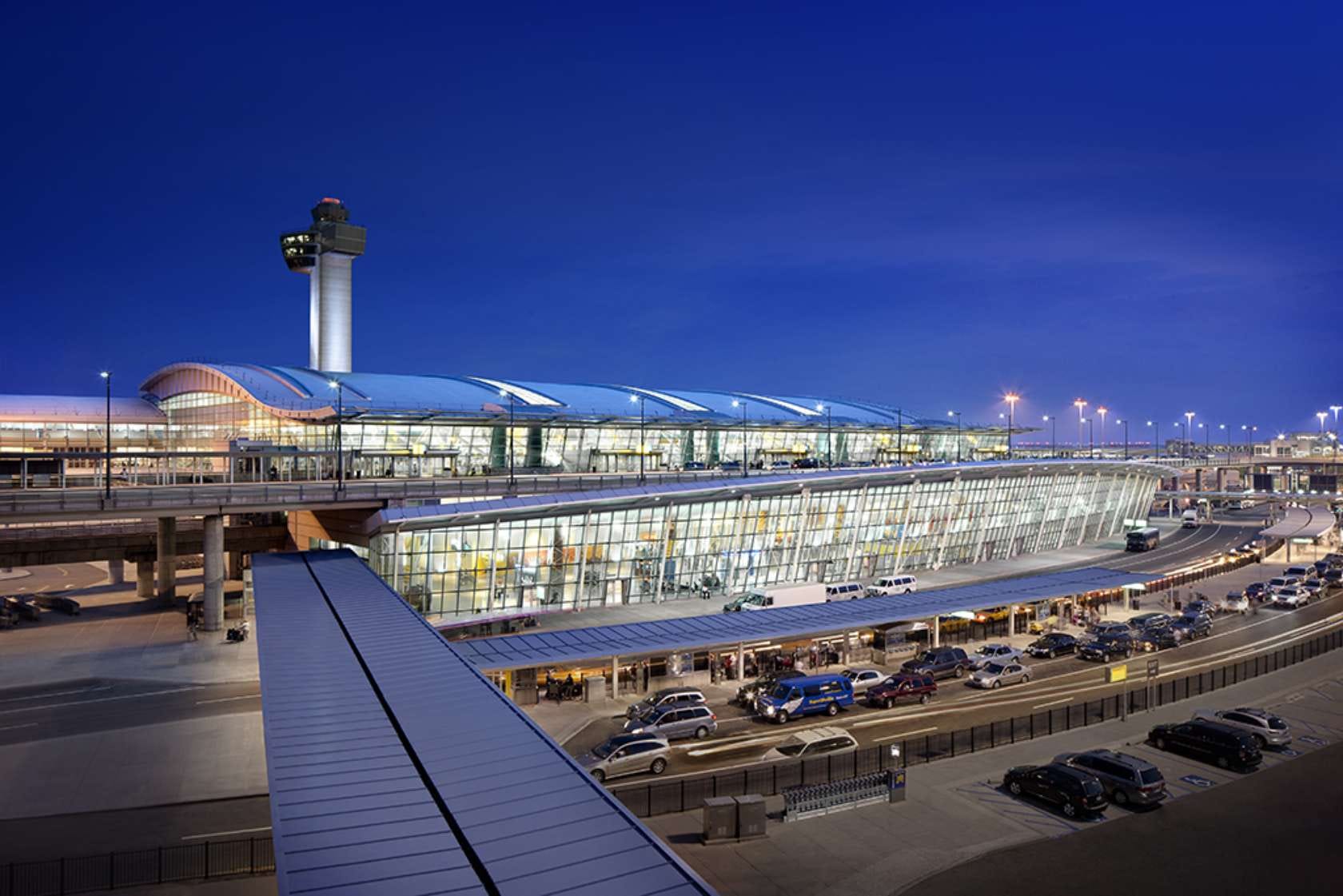
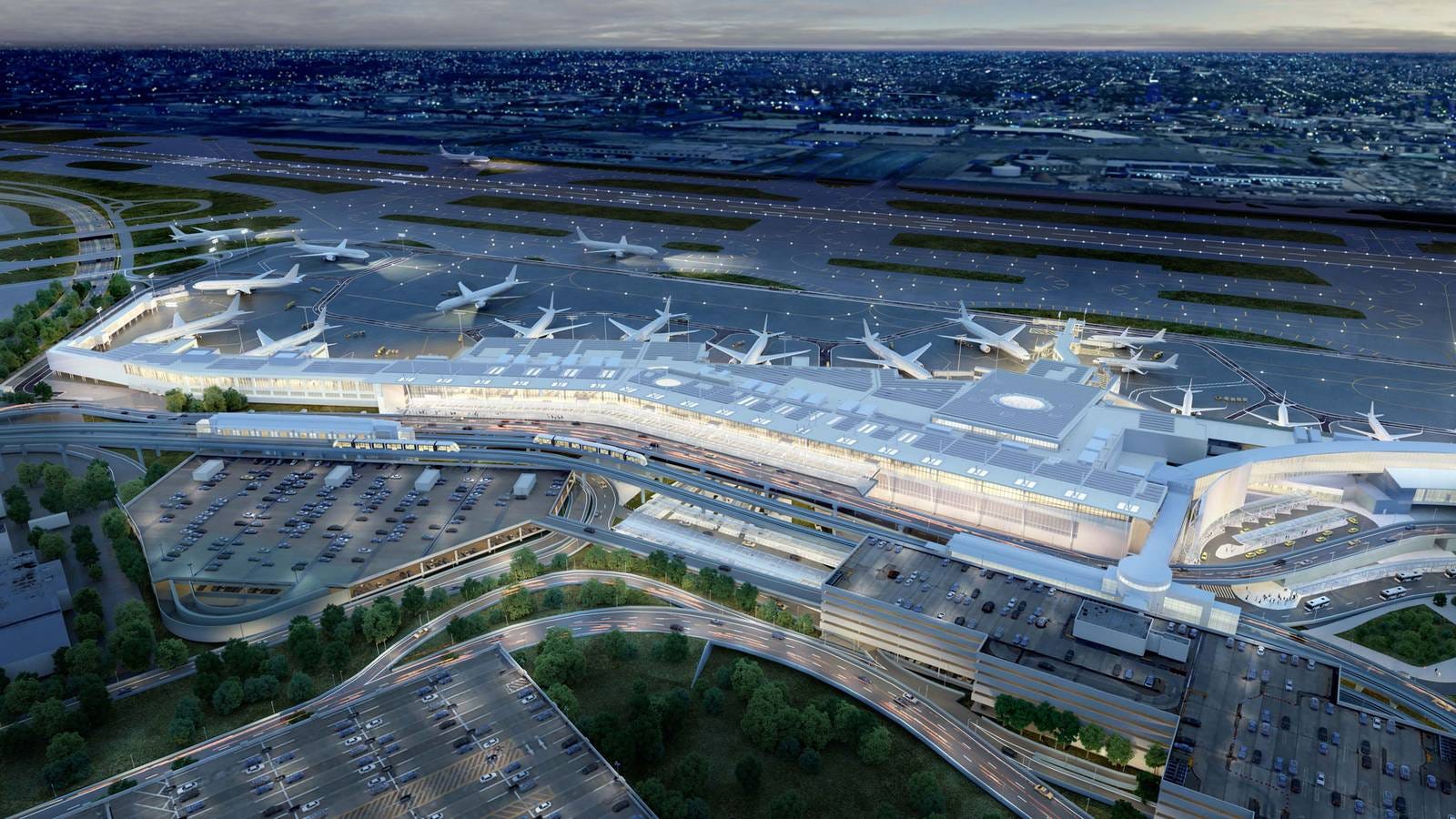
Private capital answered part of that problem in New York. Three demand-risk terminal concessions at JFK and LaGuardia have deployed $18.8 billion since 2016. Each transaction placed private equity at risk, transferred operational control to a private entity, established direct airline revenue collection with no public authority backstop on project debt, and delivered ground rent to the grantor. The model works. Three investment-grade bond issuances confirmed it.
$18.8 billion deployed. Three concessions. One grantor. One city. Four of the world’s ten busiest airports are American. Zero appear in the Skytrax top 20.
One percent of US airline passengers use privatized airport infrastructure. Four of the world’s ten busiest airports by airline seat capacity are American: Atlanta Hartsfield, Dallas Fort Worth, Denver, and Chicago O’Hare. All four operate under full public authority management. The infrastructure deficit, the proven transaction structure, and the willing private capital all exist. The track record exists in New York alone.
That gap is the subject of this piece.
Four barriers, one structural workaround
The US legal framework for airport privatization is precise and codified. The piece found everywhere misreads it, describing the barriers as the reason the market stalled. The deal record shows something different.
Under 49 USC 47134, the Airport Investment Partnership Program, any airport sponsor seeking to sell or lease an entire airport to a private entity must obtain approval from at least 65% of scheduled air carriers by carrier count and at least 65% by total landed weight at the airport. Both thresholds apply simultaneously. At any large-hub airport where a dominant carrier controls a material share of landed weight, that carrier holds a structural veto. To date, only 2 airports have completed the privatization process under AIPP. One, Stewart International in New York, subsequently reverted to public ownership. Luis Muñoz Marín International in San Juan, Puerto Rico, remains the only sustained US commercial service airport under private management through AIPP.
The statutory veto operates alongside a financial barrier. Under 49 USC 47107, airport land and revenues must remain dedicated to airport purposes. An AIPP transaction requires a federal exemption from those provisions, which in practice means the sponsor must address the repayment of outstanding AIP grants before ceding control. For large-hub airports carrying decades of federal grant history, that obligation materially reduces net proceeds to the public sponsor and makes whole-airport deals unattractive regardless of private investor appetite.
Two further constraints apply below the statutory level.
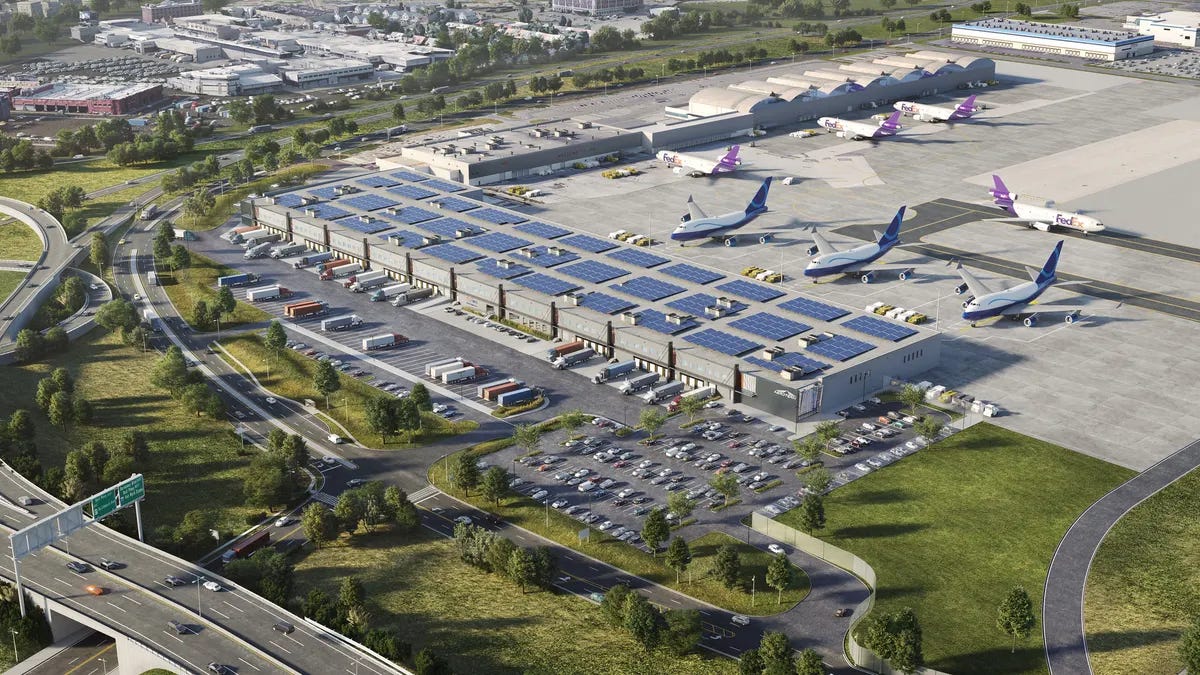
Under residual use agreements, the dominant structure at large US hubs, signatory airlines bear the airport’s budget deficits in exchange for reduced fees. The Majority-in-Interest clause embedded in those agreements narrows the airport authority’s control over capital projects. An anchor carrier holding a residual agreement with MII provisions can block a terminal P3 contractually, through its use agreement, without invoking the federal statute.
The fourth constraint is lease duration. According to the FAA’s 2023 P3 report, 19 of 30 large-hub airports hold lease terms of less than 20 years. Demand-risk terminal financing requires a concession term of 35 years or more to amortize project bonds at investment-grade cost. An authority without that capacity cannot structure the transaction regardless of intent.
The terminal DBFOM model resolved the first 2 barriers structurally. Terminal-only DBFOM transactions, such as JFK NTO and JFK T6, fall outside the AIPP framework. They keep the 65% consent threshold inactive and generate no federal grant repayment obligation. The private operator holds a ground lease on the terminal site. The airport remains with its public owner.
The third and fourth barriers required transaction-specific solutions. LaGuardia Terminal B and JFK NTO used common-use terminal configurations with no dominant anchor carrier, keeping the MII clause without a target. JFK T6 brought JetBlue, the carrier that would have held MII leverage, into the consortium as a co-equity investor and anchor tenant. Its financial return became dependent on the terminal’s success, converting a potential blocker into a structural partner.
LGA Terminal B operates under a 35-year ground lease. JFK NTO runs to 2060, 38 years from financial close. Both required PANYNJ’s bi-state authority structure to grant that duration without legislative approval at each step.
The 4 barriers were cleared. Three times. In one city. Under one grantor. A different constraint explains why the model has produced zero transactions anywhere else.
The missing operator
Three terminal concessions. Two operators. Zero headquartered in the United States.
Vantage Airport Group, a Canadian company wholly owned by Corsair Infrastructure, led both LaGuardia Terminal B and JFK Terminal 6 as principal developer and operator. The company has operated airports and transportation infrastructure since 1994. Ferrovial SE, registered in Amsterdam, operationally headquartered in Madrid, founded in Spain in 1952, led the JFK New Terminal One consortium at 49% equity. US capital participated in all 3 transactions. Carlyle holds equity in NTO. American Triple I and RXR hold equity in T6. US contractors built the facilities. The concession operating role, structuring the deal, negotiating airline use agreements, managing 35 years of revenue covenant, bearing operating risk, went to Vantage or Ferrovial each time.
That distribution has 2 direct consequences for the market.
Grantor leverage on each RFP. Three to four organizations globally hold the integrated capability to structure and operate a 35-year demand-risk terminal concession at investment-grade cost. Any US airport authority issuing a terminal P3 RFP today faces a structurally thin market. Thin competition produces worse concession terms on each transaction: higher required equity returns, less favorable revenue share arrangements, reduced operating innovation in proposals received. Each additional qualified bidder that enters a process strengthens the public authority’s position at the negotiating table. The current pool size costs the grantor on each deal it manages to structure.
Market scale versus operator supply. The US has 30 large-hub airports. A fraction clear all 4 structural conditions today. The current pool of 3 to 4 operators cannot absorb simultaneous RFPs from multiple authorities. Deals that fail to proceed for want of a qualified operator represent foregone private capital and foregone infrastructure renewal.
The ceiling on market expansion is operator supply: an organizational constraint, distinct from a statutory one.
A gap of its own making
The regulatory debate on US airport privatization focuses on 49 USC 47134. Three transactions and $18.8 billion in deployed capital have resolved that debate. The barriers exist in statute. They apply to whole-airport transactions under AIPP. The terminal DBFOM model cleared them structurally, through project design, without a single line of legislation changing. The deal record has settled that question.
The constraint is operator supply. Operator supply is built over decades through a domestic concession pipeline.
A qualified airport concession operator is a specific type of entity. It integrates 3 functions that financial sponsors and construction contractors each carry only in part: project finance structuring against terminal revenue streams, direct airline use agreement negotiation and fee management, and long-term terminal operations covering retail optimization, demand forecasting, and revenue covenant compliance. Rating agencies require prior concession operating experience before pricing investment-grade demand-risk bonds. That track record requirement creates a structural entry barrier. An organization with zero completed demand-risk concessions fails to satisfy it on a first transaction, regardless of its capital base or construction capability.
India’s domestic airport privatization wave produced a direct illustration of how that capability is built. GMR Group won the Delhi concession in 2006, then Hyderabad the same year. Two domestic transactions established the institutional track record. GMR is now the world’s second-largest private airport operator by passenger volume, serving over 135 million passengers annually, with international concessions in the Philippines, Indonesia, and Greece. The capability took approximately 20 years to accumulate from the first domestic concession to a global operating platform. It was built entirely through a domestic pipeline.
The global wave of airport privatization that began with BAA in 1987 and spread to more than 850 airports in 90 countries over the following 35 years produced every organization that now bids on US terminal P3 transactions. Vantage built its model through the Changi Airport Group international network. Ferrovial built it through Heathrow and a portfolio of European concessions. Each needed a first domestic transaction to establish the track record that lenders require. The US generated no equivalent pipeline. Public authorities managed all 30 large-hub airports for 80 years.
The conversation about US airport privatization will continue to focus on the regulatory framework because statutes are visible and amendable. The operator gap is slower, less legible, and requires a different category of decision: structured apprenticeship transactions at smaller scale, deliberate track record development, and acceptance that the first generation of domestic concession operators carries higher development cost than importing Vantage or Ferrovial again.
The 27 large-hub airports outside the PANYNJ system will keep watching a model that works, fielding no qualified domestic bid to replicate it.
Eighty years of public authority management produced no domestic operating school, no concession pipeline, and no institutional track record that satisfies a demand-risk lender. That is the constraint. It has nothing to do with regulation.
Three concessions proved the model. The operator gap, built over 80 years of public authority management, will determine how long it takes the rest of the US market to follow.
Further analysis is available upon request. It includes a structural assessment of each of the 3 US terminal P3 transactions, an operator capability profile of the organizations currently active in the US market, and an airport readiness screening identifying which large-hub airports outside the PANYNJ system clear the 4 structural conditions today.
Sources
ACI-NA, Airport Infrastructure Needs Study 2025–2029, March 2025. ACI World, Private Sector Participation in Airports, 2025. FAA, Airport P3 Pilot Program Report, 2023. FAA Order 5190.6C, Airport Compliance Manual, Chapter 15, February 2026. 49 USC 47134, Airport Investment Partnership Program, as amended by FAA Reauthorization Act 2018 (P.L. 115-254). 49 USC 47107, Project Grant Application Approval Conditioned on Assurances About Airport Operations. PANYNJ Board of Commissioners, JFK New Terminal One Resolution, 2022. PANYNJ Board of Commissioners, JFK Terminal 6 Resolution, August 2021. Vantage Airport Group / Corsair Infrastructure, LaGuardia Terminal B Completion, Business Wire, November 2022. Vantage Airport Group / Corsair Infrastructure, JFK Terminal 6 Financial Close, Business Wire, November 2022. Skytrax, World Airport Awards 2025. GMR Airports Limited, Corporate Profile and Annual Operations, FY2024.